
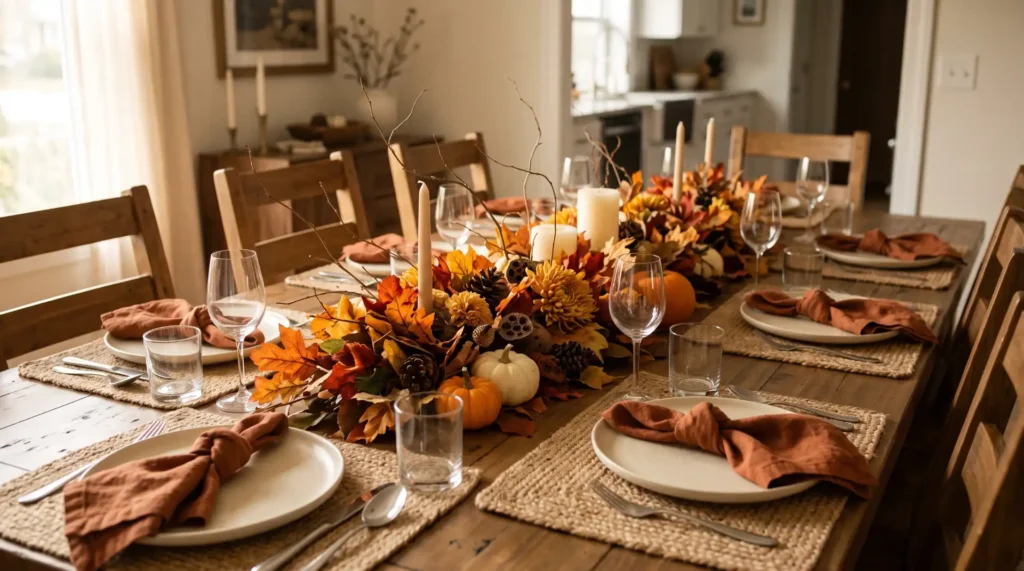
When autumn arrives, nature provides some of the most beautiful decorating materials imaginable. Trees turn brilliant shades of red, orange, and gold, garden flowers bring a final burst of color, and seasonal produce fills farmers’ markets with pumpkins, gourds, apples, and other harvest treasures. These simple natural elements can become the foundation of a beautiful dining table without requiring expensive decorations or professional floral design skills.
Creating DIY natural fall centerpieces is a wonderful way to welcome the season into your home while expressing your own creativity. Instead of buying a complete arrangement from a store, you can combine colorful leaves, interesting branches, seasonal flowers, and a few household items to create something personal. The finished centerpiece can feel rustic and relaxed, elegant and understated, or festive enough for a Thanksgiving celebration.
Natural centerpieces are also flexible. A small arrangement can brighten a kitchen table throughout October, while a longer design can become the focal point of a dining table when family and friends gather for a holiday meal. Because many materials can be collected outdoors or reused from previous decorating projects, this approach can also help you manage your seasonal decorating budget.
In this guide, you will learn how to gather and prepare natural materials, choose the right flowers, create several different centerpiece styles, and arrange everything so your table looks inviting rather than crowded. Whether you live in a suburban home, a country farmhouse, or a small apartment, you can create an autumn centerpiece that feels appropriate for your space.
 Why Natural Fall Centerpieces Are Worth Making
Natural fall centerpieces bring the colors and textures of the outdoors into everyday living spaces. Unlike decorations that rely entirely on plastic ornaments or manufactured accessories, these arrangements celebrate the changing season through real foliage, flowers, branches, and other organic materials.
One of their greatest advantages is versatility. A collection of golden leaves and a simple ceramic vase might suit a modern dining room, while weathered branches, dried seed heads, and small pumpkins can complement a farmhouse-style kitchen. The same basic materials can be rearranged to match different rooms, occasions, and personal preferences.
Natural materials also create visual interest through texture. Smooth glass, delicate flower petals, rough branches, soft linen, and the slightly irregular shapes of fallen leaves offer contrasts that make a table feel thoughtfully decorated. You do not need a large number of objects when each material contributes something different.
Another benefit is affordability. If you have access to suitable trees and plants, you may already have some of the materials you need. A few grocery-store chrysanthemums, an inexpensive bunch of seasonal flowers, or a secondhand vase can complete the arrangement without a substantial investment.
The most successful DIY projects do not necessarily look expensive. They look intentional. A limited color palette, a suitable container, and a thoughtful arrangement of natural elements can create a result that feels polished even when the materials are simple.
Choose a Fall Color Palette Before You Begin
Before collecting leaves or buying flowers, decide what kind of atmosphere you want to create. Autumn decorating often features orange, red, yellow, and brown, but there are many ways to interpret these colors. A softer palette can feel calm and sophisticated, while deeper colors create a dramatic table suitable for evening entertaining.
Traditional Autumn Colors
For a classic fall centerpiece, combine burnt orange, golden yellow, deep red, and warm brown. These colors echo the changing foliage across much of the United States and work particularly well with wooden tables, cream-colored dishes, and neutral table linens.
Maple leaves can supply vibrant reds and oranges, while oak leaves contribute bronze and brown tones. Golden chrysanthemums and rust-colored dahlias add floral color without making the arrangement feel disconnected from the foliage.
Try to use several shades rather than matching every material exactly. Slight differences in color make a natural arrangement more interesting and help it look collected rather than overly coordinated.
Neutral and Natural Colors
If your home features white walls, light wood, beige upholstery, or a minimalist interior, consider a more restrained palette. Cream pumpkins, pale dried grasses, muted green foliage, tan branches, and ivory flowers can create a gentle autumn look without overwhelming the room.
A neutral centerpiece can remain attractive for much of the season because it does not depend on a single holiday color scheme. You can introduce a few orange leaves or burgundy flowers when you want a stronger seasonal effect.
Rich and Dramatic Colors
For formal dinners or evening gatherings, try combining burgundy, deep plum, copper, dark green, and warm gold. These colors work especially well with dark wood, brass accents, and simple white dinnerware.
Use the darkest shades selectively. A few deep-colored flowers or burgundy leaves can create depth, while lighter flowers and natural branches prevent the arrangement from becoming visually heavy.
A useful rule is to choose one dominant color family, one supporting color, and one subtle accent. This keeps the centerpiece cohesive while leaving room for the natural variation that makes handmade arrangements appealing.
Gather Natural Materials for Your Centerpiece
The materials you choose will determine the overall appearance of your arrangement. Fortunately, you do not need an elaborate collection. A handful of well-selected leaves, a few interesting branches, and several flowers can be enough to create a balanced design.
Collect Colorful Leaves
Leaves are often the easiest starting point for a natural fall centerpiece. Depending on your region, you may find red maple leaves, golden oak leaves, yellow birch leaves, or other attractive foliage. Different trees produce different shapes, so combining several types can add depth without introducing too many colors.
Look for leaves that have strong color and relatively intact edges. Avoid foliage that is slimy, moldy, heavily damaged, or covered in unknown substances. Gather only from places where collection is permitted, and avoid protected natural areas or private property without permission.
If you want to use fresh leaves, collect them close to the time you plan to decorate. Fresh foliage may curl, dry, or change color as it loses moisture. If you prefer a longer-lasting arrangement, consider using properly dried or preserved leaves instead.
For additional preparation advice, read Better Homes & Gardens’ guide to using real branches and leaves as fall decor. It explains several ways to prepare and preserve natural foliage for seasonal decorating.
Select Interesting Branches
Branches give a centerpiece structure and movement. A few slender stems can rise above a low arrangement of flowers, creating an organic shape that draws the eye without filling the entire table.
Look for branches with attractive curves, branching patterns, or small leaves that have begun to change color. Birch, maple, and suitable fruit-tree branches can work well when they are safely identified and collected responsibly.
Choose branches that fit your container and dining area. Extremely long or heavy pieces can make the arrangement unstable, while branches with sharp ends may create a safety concern around children or guests.
Shake collected branches outdoors and inspect them carefully before bringing them inside. Remove loose bark, damaged foliage, and any visible insects. Use clean pruning tools when cutting permitted branches, and never take material from a plant you cannot confidently identify.
Bare branches can also look beautiful on their own. Place several in a sturdy vase, add a few carefully positioned leaves, and allow the natural silhouettes to provide the visual interest.
Choose Seasonal Flowers
Flowers soften the structure created by branches and foliage. In the United States, chrysanthemums are widely available during autumn and come in colors that complement traditional fall palettes. Dahlias, asters, sunflowers, and other locally available seasonal flowers can also work beautifully.
You do not need a large bouquet. Three or four substantial blooms may be enough for a small arrangement, particularly when supported by attractive foliage and branches.
Select flowers with firm stems, healthy petals, and no obvious signs of decay. If you are cutting flowers from your own garden, use clean, sharp tools and place the stems in water promptly. Remove leaves that would sit below the waterline to help maintain water quality.
For additional guidance on preparing cut flowers, see the University of Minnesota Extension’s flower-arranging advice. Its guidance covers flower condition, clean containers, and basic principles of balanced floral design.
Add Small Natural Accents
Acorns, pinecones, seed pods, small gourds, and mini pumpkins can provide extra texture. These details work best when they support the centerpiece rather than compete with the flowers.
Choose clean, dry accents and inspect them for insects, mold, or deterioration before using them indoors. Keep decorative produce separate from food that will be served, and avoid placing dirty outdoor materials directly on plates or food-contact surfaces.
You can also introduce natural materials you already own, such as a wooden bowl, a woven tray, or a linen runner. The aim is to combine a few contrasting textures rather than cover every available space.
Prepare Your Materials Before Arranging
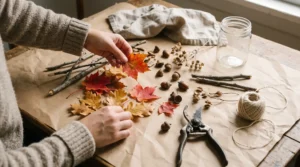
A little preparation makes the creative process easier and helps the finished centerpiece look cleaner. Set aside a work surface, gather your supplies, and sort your materials by size and type before assembling anything.
Wash reusable containers with warm, soapy water and rinse them thoroughly. If you are using a vase for fresh flowers, make sure it is clean and suitable for holding water. Prepare a separate work area for trimming branches and handling outdoor materials.
Fresh leaves can be gently rinsed when appropriate, then patted dry and allowed to air-dry. Avoid sealing damp foliage inside a decorative container because trapped moisture can encourage mold.
If you want to preserve leaves for repeated use, pressing them between absorbent paper under a heavy book is a straightforward option, although it takes time and works best with suitable leaves. Pressed foliage is flat and fragile, so it is better for decorative accents than for creating a full, dimensional arrangement.
Preservation methods differ in their results. Some methods maintain flexibility, while others create crisp, flat leaves. Follow the instructions for the method you choose, and allow materials to dry or cure completely before bringing them near candles or other heat sources.
Branches can be placed in clean water if you want to retain their foliage, or displayed dry if you prefer a sculptural look. If you use a glycerin-based preservation method, follow a reliable, detailed procedure and keep the solution away from children and pets.
Before arranging everything, lay the materials out on your work surface. This simple step allows you to see whether you have enough variation in height, color, and texture. It also helps you avoid overfilling the centerpiece simply because you have collected too many attractive objects.
Choose a Container That Complements the Design
The container is part of the centerpiece, not merely a place to hold flowers. Its shape, color, and material influence how the arrangement looks and how well it fits your table.
Glass Vases for a Clean, Simple Look
Clear glass works well when you want the natural stems to remain visible. A medium-sized glass vase can hold branches, while a low glass vessel is suitable for a compact flower arrangement.
Glass also suits modern interiors because it does not introduce much visual weight. To make the arrangement feel more seasonal, use a mixture of red leaves, golden foliage, and a few warm-colored blooms.
If the stems look messy through the glass, use a vase with a narrower neck or arrange the stems more carefully. A clean container and visible water line usually look better than a crowded vessel filled with too many materials.
Ceramic Pitchers and Vintage Crocks
Ceramic pitchers, stoneware vessels, and vintage crocks create a more relaxed farmhouse appearance. Their opaque surfaces hide the stems and provide a solid visual base for branches and flowers.
Cream, warm gray, muted green, and earthy brown are especially versatile colors. If you already own a pitcher that is no longer used for serving, it may be ideal for decorative arrangements, provided it can safely hold water when needed.
For more budget-friendly inspiration, explore Dupe-It-Yourself Decor: Upcycling High-End Looks for Less. Repurposing a simple vessel you already own can give your fall table a distinctive look without purchasing a new decorative container.
Wooden Bowls and Shallow Trays
A shallow wooden bowl or tray is particularly useful for a low centerpiece. It can hold mini pumpkins, pinecones, dried leaves, and small containers of flowers while keeping the overall design close to the table surface.
Use a waterproof liner or separate waterproof vessels if the container is not designed to hold water. This prevents moisture from damaging wood or other delicate finishes.
A tray also makes the arrangement easier to move. You can lift the complete display off the dining table when it is time to serve dinner, then return it afterward.
Repurposed Jars and Small Bottles
For an inexpensive centerpiece, collect several clean glass jars or small bottles and arrange them in a line. Place one or two flowers in each vessel, then add leaves or a few delicate branches between them.
This approach works well for narrow tables because it spreads the arrangement horizontally rather than creating one large object in the center. It is also easy to adjust when you have only a small number of flowers available.
Vary the heights of the containers slightly to keep the design from looking too uniform. However, maintain a shared color palette so the collection feels intentional.
Create a Classic Fall Leaf and Flower Centerpiece
This is a versatile project for beginners because it combines a simple flower arrangement with natural foliage. It works on a kitchen table, dining table, or console and can be adjusted to suit both small and large spaces.
Materials You Will Need
Gather a medium-sized vase or ceramic container, several seasonal flowers, a selection of colorful leaves, a few small branches, clean water, and floral shears. A waterproof tray is useful if the container will sit on a delicate table surface.
Choose flowers in two or three complementary colors. For example, golden chrysanthemums, rust-colored dahlias, and cream flowers can create a warm palette without becoming too busy.
Step 1: Establish the Shape
Begin with the branches. Place two or three stems in the container, allowing them to spread naturally rather than forcing them into a perfectly symmetrical shape.
Step back and examine the silhouette from several angles. If one branch dominates the arrangement, shorten it or reposition it. The branches should provide height and movement while leaving room for the flowers.
Step 2: Add the Main Flowers
Trim the flower stems so the blooms sit at different heights. Place the largest or most colorful flowers first, distributing them around the container rather than clustering them all on one side.
Keep the arrangement relatively open. Flowers should be visible individually, and there should be enough space for the foliage to contribute its own texture.
Step 3: Fill With Leaves and Smaller Details
Add leaves around the flowers, using the brightest colors where you want to draw attention. Smaller foliage can fill gaps, but avoid covering every visible stem or creating a dense mass.
Turn the arrangement as you work so it looks attractive from the directions where people will see it. A centerpiece on a round table needs to look balanced from several sides, while an arrangement against a wall can be designed primarily for a front-facing view.
Step 4: Finish the Table
Place the finished arrangement on a neutral runner or directly on the table. Add a few mini pumpkins or a small wooden bowl nearby if the table needs extra seasonal detail.
Do not crowd the centerpiece with too many accessories. The arrangement should remain the main feature, with enough open space around it to make the entire table feel comfortable.
Make a Low Pumpkin and Foliage Centerpiece
A low centerpiece is ideal for family meals because it decorates the table without creating a visual barrier between guests. This style is particularly useful for Thanksgiving, when the table may already hold serving dishes, bread baskets, and drinks.
Start with a shallow tray or a long wooden board. Arrange three or five small pumpkins along the center, varying their sizes and colors if possible. White, pale green, and traditional orange pumpkins can work together when the rest of the palette is consistent.
Next, tuck leaves around the pumpkins. Allow a few stems to extend beyond the main grouping, but keep the foliage low enough that it will not interfere with plates or glasses. Small branches can add movement, although they should not protrude into guests’ seating spaces.
For a more floral look, add a few small water-filled bud vases between the pumpkins rather than placing cut flowers directly against the produce. This gives the arrangement fresh color and makes it easier to replace flowers when they fade.
The overall design should feel like a natural collection rather than a perfectly measured row. However, keep the largest pumpkins near the center or distribute them evenly so the tray does not look unbalanced.
One advantage of this arrangement is its flexibility. You can remove the flowers and keep the pumpkins and foliage in place for a simpler display, or replace the leaves with evergreen accents as the season transitions toward winter.
Design a Branch-Focused Centerpiece for a Modern Home
Not every autumn centerpiece needs flowers. Branches can create a striking display on their own, especially in a room with clean lines, neutral colors, or a minimalist decorating style.
Choose a sturdy vase with a sufficiently wide base. Add several branches with interesting shapes, then rotate and reposition them until the silhouette feels balanced. A few curved branches can be more visually effective than a large bundle of straight stems.
If the branches retain attractive leaves, let their natural color provide the seasonal effect. If they are bare, combine them with a small collection of mini pumpkins or a shallow bowl of acorns placed beside the vase.
The secret to this design is restraint. A sculptural arrangement needs space around it, so avoid surrounding it with many small decorations. The contrast between the branches and the empty space is part of what makes the arrangement interesting.
This centerpiece can be particularly useful on a console table, kitchen island, or sideboard where a larger floral arrangement might feel too crowded. On a dining table, check the height carefully to ensure it does not obstruct conversation.
For more inspiration on balancing decorative objects and natural textures, visit Styling Your Shelves with Purpose: The Art of Layered Decor. The same principles of layering and leaving breathing room can help you style a table more successfully.
Make a Rustic Mason Jar Flower Arrangement
Mason jars are useful for casual fall decorating because they are inexpensive, widely available, and easy to reuse. A single jar can hold a compact arrangement, while several jars can create a longer display across the table.
Start with a clean jar and fill it with fresh water if you are using cut flowers. Choose a small collection of chrysanthemums, asters, or other seasonal blooms. Trim the stems so the flowers sit comfortably above the rim without becoming too tall.
Add a few leaves or small branches, but keep the opening clear enough that the arrangement does not look crowded. If the jar appears too plain, wrap a strip of linen or cotton twine around the outside. Keep decorative fabric and twine away from the water and flower stems.
For a group arrangement, use three jars of different heights or place similar jars along a narrow tray. Distribute flowers across the containers rather than filling one jar completely and leaving the others empty.
This design is especially useful for casual gatherings, porch dinners, and everyday family meals. It can also be adapted to a small apartment dining table where a large centerpiece would take up too much space.
Avoid placing jars where they can be easily knocked over. If the table is frequently used for homework, crafts, or food preparation, a tray helps keep the arrangement together and makes it easier to move.
 Create an Elegant Centerpiece With Seasonal Flowers
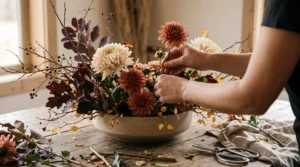
For a more polished arrangement, use fewer varieties of flowers and focus on shape, proportion, and color. You do not need expensive blooms to achieve an elegant result. The quality of the arrangement depends as much on how the flowers are placed as on the flowers themselves.
Choose a low ceramic vessel or a simple glass vase. Select one dominant flower, such as a chrysanthemum or dahlia, and support it with smaller blooms and complementary foliage. A restrained combination of cream, rust, and burgundy can create depth while maintaining a cohesive appearance.
Begin by arranging the foliage to establish the general shape. Add the main blooms at slightly different heights, then use smaller flowers to fill the remaining spaces. Avoid forcing every stem into the center of the container. A little asymmetry can make the arrangement look more natural.
For a long dining table, consider making two or three smaller arrangements rather than one oversized bouquet. Smaller groupings are easier to position around serving dishes and can be reused in different rooms after the gathering.
Keep fresh flowers away from heat sources and direct hot sunlight. Check the water regularly, remove wilted blooms, and refresh the arrangement when necessary. These simple habits help preserve the appearance of your centerpiece throughout the occasion.
Arrange a Natural Centerpiece on a Budget
Beautiful fall decorating does not require buying every material new. In fact, a centerpiece often looks more personal when it includes items already found around the home.
Begin by checking your cabinets for unused glass jars, ceramic bowls, pitchers, and vases. Look for wooden trays, linen napkins, or neutral runners that could serve as a base. These pieces may already provide the texture and color needed to make the arrangement feel complete.
Next, gather suitable natural materials from your own yard or from places where collection is permitted. Fallen leaves, small branches, and clean pinecones can provide much of the visual interest. If you need flowers, purchase a small bunch from a local grocery store, farmers’ market, or garden center rather than buying several separate varieties.
You can also reuse decorations from previous seasons. A plain vase can be styled differently with a new collection of branches, while an existing bowl can hold small pumpkins instead of its usual contents.
Set a spending limit before you shop. For example, decide that you will buy flowers only if the foliage and branches you have collected do not create enough color. This encourages you to work creatively with the materials available instead of purchasing unnecessary accessories.
The goal is not to make a centerpiece that looks inexpensive. It is to create something attractive by using your resources thoughtfully. A restrained arrangement of well-chosen materials can look more sophisticated than a crowded display filled with expensive decorations.
Style Your Centerpiece for Thanksgiving Dinner
Thanksgiving tables need to balance decoration with practicality. The centerpiece should establish a festive mood while leaving room for the food, drinks, and place settings that make the meal possible.
Begin by measuring the available table space. If your table is narrow, choose a compact arrangement or a series of small vessels. If you have a large dining table, a long, low display can help the center feel connected without making the arrangement excessively tall.
Keep the color palette consistent with your plates, napkins, and table linens. Neutral dishes work with almost any autumn arrangement, while darker plates can provide a dramatic contrast against golden leaves and cream flowers.
Place the centerpiece where it can be seen from different seats. Tall branches may look impressive in a photograph, but they can obstruct eye contact across the table. If you prefer a tall arrangement, consider placing it on a sideboard or console instead.
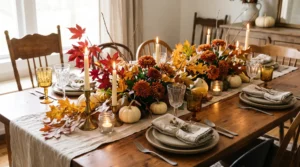
Candles can add warmth to a Thanksgiving table, but safety should come first. Use stable holders, keep flames well away from dried leaves and branches, and never leave burning candles unattended. Battery-operated candles are an attractive alternative when the centerpiece contains flammable materials or the table is crowded.
Finally, leave enough open space for serving dishes. A beautiful table should support the meal rather than make it difficult to serve food. A removable tray is especially helpful because the centerpiece can be lifted away when guests need more room.
Keep Your Natural Centerpiece Looking Fresh
Fresh materials change over time, and this is part of their appeal. However, a few basic care practices can help your arrangement remain attractive for longer.
Check the water level in flower vases daily and replace cloudy water. Remove any leaves sitting below the waterline, and trim the stems when necessary. If your flowers begin to wilt, replace them individually rather than discarding the entire arrangement.
Keep fresh foliage away from heaters, fireplaces, and strong drafts. Heat can cause leaves and flowers to dry quickly, while excessive moisture can encourage deterioration. A stable indoor location with moderate light is generally a better choice than a windowsill exposed to intense direct sun.
Dry decorative materials should remain dry. If leaves or seed heads become damp, remove them and allow them to dry thoroughly before returning them to the arrangement. Discard materials that show mold, an unpleasant odor, or significant decay.
Inspect the centerpiece regularly, particularly if you have collected materials outdoors. Remove any insects or damaged plant parts, and avoid using unidentified berries or plants in arrangements accessible to children or pets.
If you want a display that lasts beyond one gathering, consider mixing fresh flowers with durable decorative elements. Keep the flowers in water-filled vessels and use dried foliage or branches around them. This makes it possible to replace the perishable parts without rebuilding the entire centerpiece.
Common Mistakes to Avoid When Making Fall Centerpieces
One common mistake is adding too many different elements. Leaves, flowers, branches, pumpkins, pinecones, candles, ribbons, and decorative figures may all be attractive individually, but using every material at once can make the table feel crowded. Choose a few elements that work together and let their natural textures provide variety.
Another problem is ignoring the scale of the table. A large arrangement can overwhelm a small breakfast nook, while a tiny vase may disappear in the center of a long dining table. Match the dimensions of the container and arrangement to the space available.
Color can also become difficult to manage when every material has a different shade. You do not need to match every leaf and flower, but you should identify a dominant palette before assembling the display. Repeating a few colors creates unity.
Fresh flowers sometimes fail because they are placed in dirty containers or left without enough water. Wash your vessels, use fresh water, remove submerged foliage, and check the arrangement regularly.
Finally, do not sacrifice function for appearance. Branches that extend into place settings, unstable pumpkins, and tall decorations that block conversation can make the table less comfortable to use. A successful centerpiece should look beautiful while allowing everyone to enjoy the gathering.
Natural Fall Centerpiece Ideas for Different Home Styles
The best centerpiece is one that suits the home where it will be displayed. Although the same natural materials can work in many interiors, the container, color palette, and arrangement style make a significant difference.
Farmhouse Style
For a farmhouse-inspired table, use a wooden tray, a ceramic pitcher, warm-colored leaves, and small pumpkins. Cotton or linen textiles can soften the arrangement, while a few branches create height without making the design feel formal.
Keep the overall appearance relaxed rather than perfectly symmetrical. A combination of rustic materials and simple flowers will usually create enough interest without requiring many additional decorations.
Modern Minimalist Style
A minimalist centerpiece benefits from restraint. Choose a sculptural branch, a simple ceramic vase, or a small arrangement of cream flowers and muted foliage. Leave the surrounding table mostly clear so the centerpiece becomes the focal point.
Avoid unnecessary ribbons and decorative accessories. A single strong shape can have more impact than a large collection of small objects.
Cottage-Inspired Style
A cottage-inspired centerpiece can include garden flowers, delicate foliage, an old-fashioned pitcher, and a few imperfect branches. Mix flower shapes and textures while keeping the colors harmonious.
If you grow flowers at home, use what is available in your garden. Even a small selection of late-season blooms can create a charming display when combined with natural foliage.
Small Apartment or Condo
For a compact home, choose a centerpiece that can be moved easily. A small jar arrangement, a shallow bowl of mini pumpkins, or a narrow row of bud vases can decorate the table without taking over the space.
Multifunctional pieces are especially useful in small homes. A tray makes it possible to move the arrangement quickly when the table needs to be used for meals, work, or other activities.
 Make Your Centerpiece More Sustainable
Natural decorating can reduce the need for disposable seasonal accessories, particularly when you reuse containers and choose materials that are already available. However, using natural materials is not automatically sustainable; the way you collect, prepare, and dispose of them matters too.
Collect responsibly and avoid damaging living plants. Use fallen materials when appropriate, and take only what you need. Follow local rules, especially in public parks, protected areas, and managed landscapes.
Reuse vases, jars, and trays from year to year. If you purchase flowers, choose a manageable quantity and use the remaining blooms in small arrangements around the home. You can also dry suitable flowers or preserve selected leaves for later craft projects.
At the end of the season, separate reusable decorations from materials that have deteriorated. Clean and store durable containers, and compost suitable untreated plant materials where local composting guidance permits. Do not compost diseased plants or materials that may contain harmful treatments.
Avoid applying unnecessary chemical coatings to natural materials that will be displayed around food. If you preserve leaves for repeated use, follow the product instructions carefully and keep treated items away from food-contact surfaces.
A sustainable centerpiece is ultimately about thoughtful choices. By reusing what you own, collecting responsibly, and buying only what you need, you can create seasonal decor that feels personal without generating unnecessary waste.
Frequently Asked Questions About DIY Natural Fall Centerpieces
What are the best leaves for a natural fall centerpiece?
Maple, oak, birch, and other locally available trees can provide attractive fall foliage, depending on your region. Choose leaves with good color and intact edges, and make sure you can identify the plant before collecting it. For arrangements that need to last, dried or properly preserved leaves may be more practical than fresh foliage.
How can I make a fall centerpiece without spending much money?
Start with containers and decorations you already own. Collect suitable fallen leaves and branches where permitted, then purchase only a small selection of seasonal flowers if needed. A few coordinated materials can create a polished centerpiece without requiring a large budget.
Which flowers are best for autumn centerpieces?
Chrysanthemums, asters, dahlias, and locally available seasonal blooms are useful choices. Select flowers with healthy petals and sturdy stems, and choose colors that complement your foliage. Availability varies by region, so use flowers that are fresh and reasonably priced where you live.
How do I keep a natural fall centerpiece from looking messy?
Choose a limited color palette, establish the arrangement’s shape with branches or foliage, and add flowers gradually. Step back occasionally to check the balance from different angles. Removing a few unnecessary pieces often improves the finished arrangement more than adding extra decorations.
Can I make a centerpiece that lasts all season?
Yes, especially if you combine durable branches, dried foliage, reusable decorative pumpkins, and other long-lasting accents. Fresh flowers will need regular care and replacement, but they can be arranged in separate water-filled vessels so the rest of the centerpiece remains intact.
Are natural materials safe around candles?
Dried leaves, branches, grasses, and other plant materials can ignite easily. Keep open flames well away from these materials, use stable candleholders, and never leave candles unattended. Battery-operated candles are a practical alternative for arrangements containing dry foliage.
Final Thoughts: Bring the Beauty of Autumn to Your Table
DIY natural fall centerpieces offer an easy way to make your home feel more welcoming as the seasons change. With colorful leaves, interesting branches, seasonal flowers, and a few simple containers, you can create a display that reflects your personal style without spending a fortune.
The most important part of the process is learning to work with the materials you have. A simple glass jar filled with seasonal flowers can be just as appealing as an elaborate arrangement, and a few branches in a ceramic vase can create a striking focal point when given enough room.
Experiment with different colors, textures, and heights until the arrangement feels right for your home. You might create a rustic pumpkin display for Thanksgiving, a minimalist branch arrangement for everyday decorating, or a colorful floral centerpiece for a family dinner.
Most importantly, let the project be enjoyable. Collecting leaves, arranging flowers, and preparing a table for people you care about can become part of the pleasure of autumn itself. With thoughtful choices and a little creativity, your natural fall centerpiece can turn an ordinary table into a warm, inviting place to gather.